 ATU Agriculture Program
Poinsettia
Sale
Nine cultivars. 3,250 plants. Grown by students in the ATU greenhouses and sold to support the horticulture program.

Brilliant White
Velvet Dark
Superba New Glitter
Red Ribbons
Papagena
Green Envy
8:00 am–4:00 pm daily
2615 Red Hill Ln
Russellville, AR 72802
Imperial Red
This is the poinsettia most people picture. Broad true-red bracts on a compact, well-branched plant, and the largest single block we grow, which is why it stays at the base price. If you are buying a dozen for a table setting or a department gift, this is the one that will still be available in December and the one that will match plant to plant.

Brilliant White
Holds a clean ivory that reads as true white under greenhouse light and against a lit tree, without the yellow or brown cast some whites pick up when nights turn cold. Broad flat bracts in the traditional star shape — this is the plant to buy if you want a poinsettia that looks like a poinsettia.
Velvet Dark
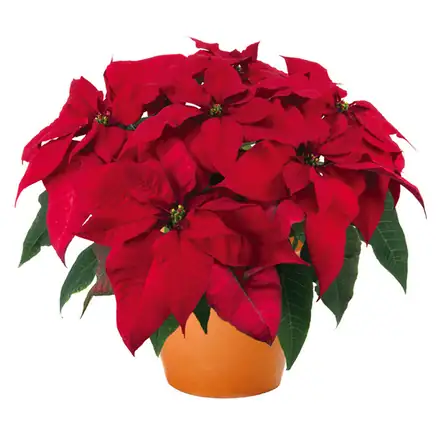
A rich red with a matte, almost velvet surface, set off by an unusually heavy canopy of very dark foliage. The contrast between bract and leaf is what separates it from the other reds. We grew fifty. That is the whole crop.
Christmas Beauty Marble
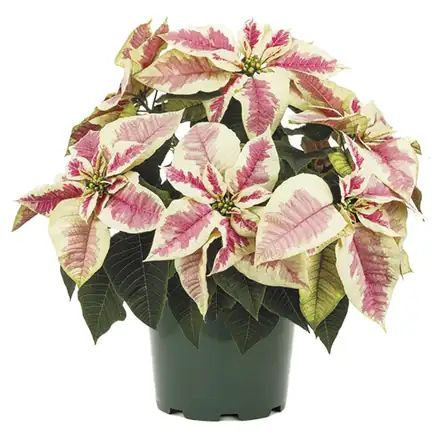
Each bract carries a dark pink blaze down the center fading to a deep cream margin, and because the marbling develops individually no two plants finish alike. The series was bred to finish well in warm southeastern conditions, which is why it is on our bench in Arkansas.

Superba New Glitter
The most decorated plant in the greenhouse. It took first place for best non-red variety at the Plantpeddler Poinsettia Variety Day trials in back-to-back years, judged by growers on production performance rather than a pretty picture. Red bracts splashed and flecked with cream, different on every plant.

Red Ribbons
Instead of broad flat bracts this one produces narrow strap-shaped bracts radiating out like a starburst. Up close it reads spiky and modern next to a conventional red. Selected for early color paired with bract structure that holds up over a long window.
Winter Rose Early Red
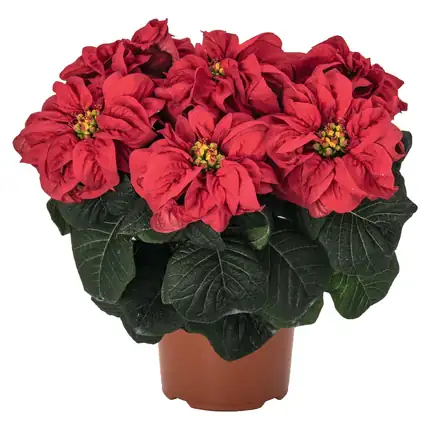
The bracts curl inward into tight rosettes instead of opening flat, so from across a room it does not read as a poinsettia at all. It reads as a pot of roses. One of very few poinsettias with real name recognition, and the Early Red selection flowers ahead of the original on a shorter plant.
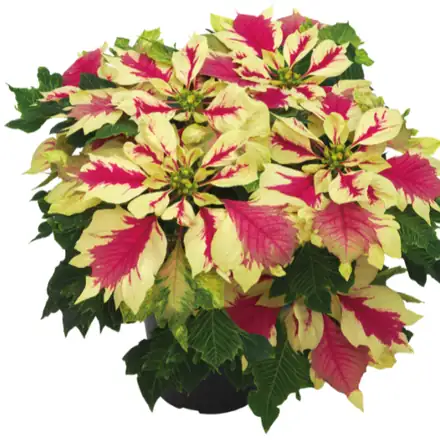
Papagena
Creamy white bracts washed with blush and hot pink through the center, marked differently on every plant. Soft, light-colored poinsettias have been the fastest-moving part of the market because they suit more homes than a traditional red. We grew a hundred.
Green Envy
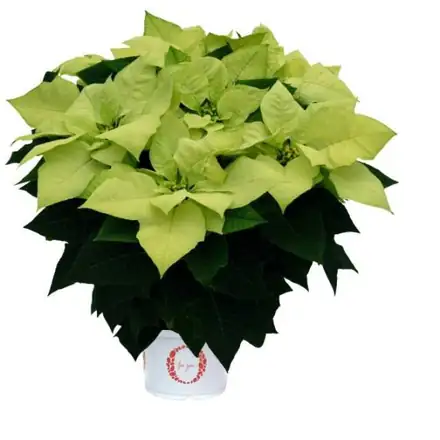
A genuine novelty and the plant visitors pull their phones out for. Light green to chartreuse bracts with wavy margins, held above the foliage rather than lying flat. It is not a substitute for a red poinsettia, it is a contrast plant.
Reservation form
Fill this out and return it to Dean Hall 123E, or email the same information to gmotolai@atu.edu. We will hold your plants under your name and you pay when you pick them up. Anything not collected by 4:00 pm on Wednesday, December 2 goes back on the bench for walk-ins.
| Cultivar | Price | Quantity | Total |
|---|---|---|---|
| Imperial Red | $12 | ||
| Brilliant White | $12 | ||
| Velvet Dark | $12 | ||
| Christmas Beauty Marble | $14 | ||
| Superba New Glitter | $14 | ||
| Red Ribbons | $14 | ||
| Winter Rose Early Red | $16 | ||
| Papagena | $16 | ||
| Green Envy | $16 | ||
| Order total | |||
Questions: Gergely (Gary) Motolai, PhD · ATU Agriculture Program · Dean Hall 123E · gmotolai@atu.edu